
“You resist change because your focus is on what you have to give up, instead of what you will gain.” inspired by Rick Godwin.
Recently, I have been watching a number of socially responsible films like The Great Indian Kitchen, Raghu Thatha, Ammu, Gargi, Laapataa Ladies, Jaya Jaya Jaya Jaya Hey, etc. Growing up in 90’s not only Tamil cinema, but the Tamil natives also weren’t ready to take even a slightest culture shock, that’s when Kalki fell like an atom bomb. There have been directors known for bold themes and ideologies very ahead of time and you can’t deny K. Balachander to be one of them. He was able to address important social issues and delve into the intricacies of relationships through his movies. KB made his audience sit up and take notice of his female leads swiftly be it in his films or serials.

Tamil cinema has a long history of sexist husbands; in fact, they are inseparable from Kaalam Maari Pochu, Viralukketha Veekkam, Mannan, Sivaranjiniyum Innum Sila Pengalum, Mayakkam Enna, and the latest Gatta Kusthi are just a few films where husbands lived through the misogynistic phrase, “Pombala dane ne” (After all, you’re a woman). I was getting into college when the songs and scenes of Kalki were aired in the T.V. The title reminded me of both the legends – Kalki Krishnamurthy and the incarnation of Lord Krishna, meaning change or revolution. There were discussions going around in and out of the family, even some of the KB fans seemed to reproach this story because it not only broke a number of gender norms, but also dared to mock cinema’s sickening obsession with the virginity of its female characters. Though I felt the theme of Kalki to be similar to that of Sindhu Bhairavi directed by KB again, this film was a bolder endeavour.

For those who haven’t watched this movie, here is it – Chellammaa (Geetha), a singer by profession gets married to a chauvinistic and equally sadistic industrialist – Prakash (Prakash Raj). Moreover, when he learns she cannot conceive, he leaves no opportunity to insult and humiliate her. While Prakash taunts, his mother says hurtful things to her, he hits and together they abuse her. Till then, a submissive and tolerating Chellamma files for divorce when Prakash prohibits her from singing. Prakash marries Karpagam (Renuka), a meek, puppet wife, and keeps torturing her like he did his ex-wife Chellamma.

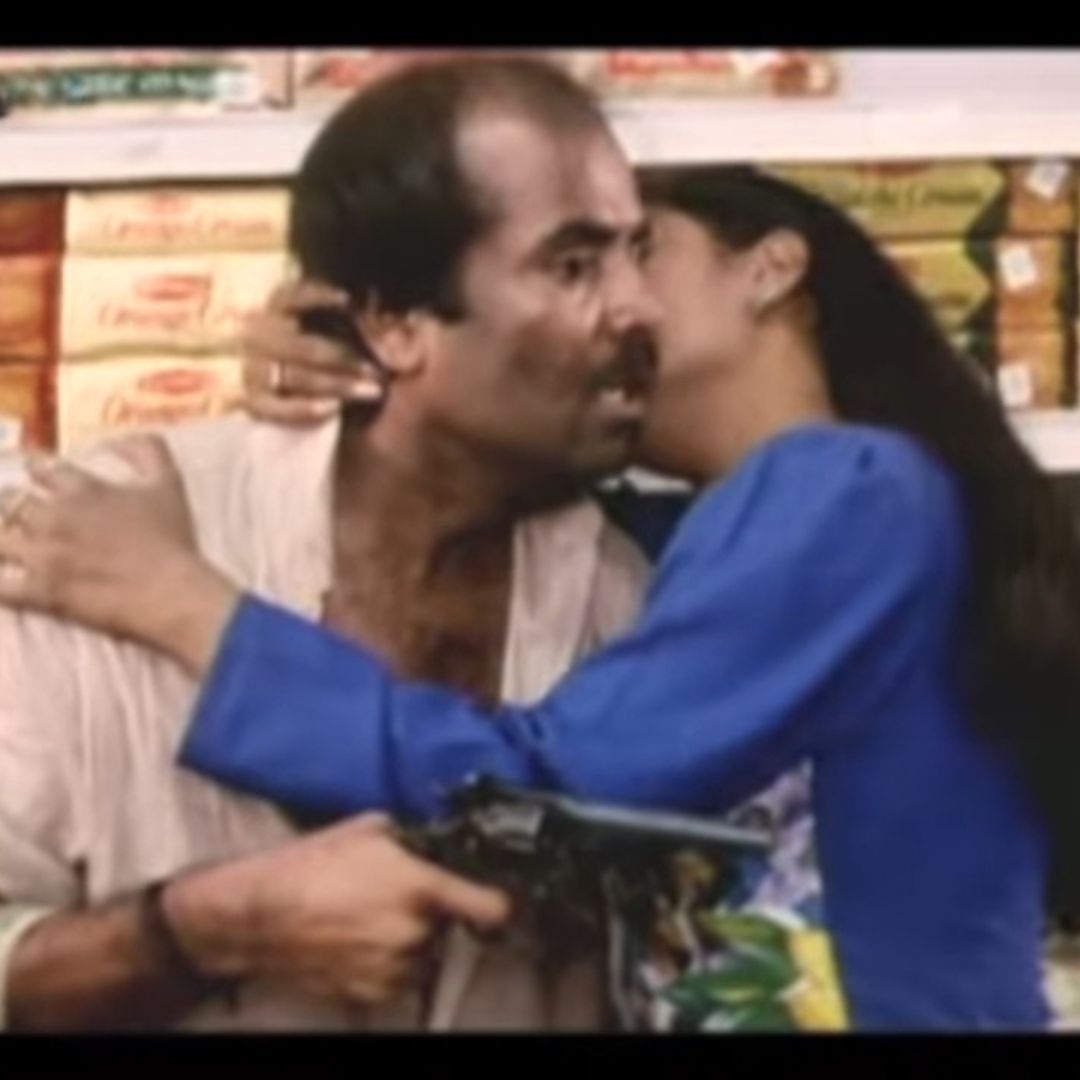
Parallelly, we get to know Kalki (Shruti), a happy, sensible and brave woman, who does multiple jobs and tries to make a living out of it. Shruti in Kalki sparkles right from the beginning. One of the best scenes in the film is the sequence where she calms down an agitated former policeman (Thalaivasal Vijay, in a splendid cameo) who brandishes a gun in a supermarket. Like other shoppers, she too is stunned initially. Nevertheless, the moment she hears of his sad past, she sets her basket aside, approaches him and upon his request kisses him. Now you can go into the rights and wrongs of the decision she takes. But for the audience to know who this character is, this is the perfect character establishment scene. It’s also a crucial scene for another reason; Chellama sees her in action and is drawn to her because she sees a trait in Kalki that she doesn’t possess – boldness. After a few encounters with Kalki, Chellamma becomes friends with her and gets her in as a paying guest. Chellamma stays single with a cook Kokila (newsreader Fathima Babu’s first movie) around to help her. Kalki starts to work in an ad agency and is hopelessly pursued by her colleague and model Paranjothi (Rahman), but she not only rejects him, but also debunks love and sentiments. The two women share a beautiful bond, and that’s when Kalki learns about Prakash, Chellama’s yearning for a child through her song, and decides to revenge Prakash. Kalki treats Prakash like trash—the way he treated both his wives to teach him a lesson. Prakash, stuck in a convoluted situation, realizes his mistake and makes amends with Karpagam.

However, how she does that and to what extent she goes against the societal norms and patriarchy became a debate. While domestic violence and financial independence is explored through Geetha’s character, women liberation and fortitude is brilliantly portrayed by Shruti’s. The film opened up to a lot of speculation – Kalki’s outspoken attitude, the path she chooses to teach Prakash a lesson, her clothing choices, everything was criticized and in fact shamed when the movie was released. Even my professors wanted to know our perspective as young women about Kalki’s actions. Most of us admired Kalki’s courage when she silences the director who verbally abuses her and her friend by speaking up; she bashes her manager when he tries to sexually harass her; she doesn’t hesitate to feature in a HIV/AIDS (a taboo topic even today) advertisement. We loved her liveliness and outspokenness, when she satirically explains how men exploit women by quoting mythologies; her love for freedom when she opines on the institution of marriage and much more; but didn’t agree with her choice of bearing Prakash’s child just for the sake of a woman who showed her some kindness. But then if she had chosen the usual route of a “common woman” how could she be KB’s heroine?

The three female characters, played by Geetha, Shruti, and Renuka, are all superbly detailed. The actors have done full justice to their roles, each being diverse from one another. Not only the female characters in the film, but also the female audience admired the titular character played by Shruti. But in my view, Karpagam shows some traits of Chellamma in the end and Chellamma has some qualities of Kalki. All four women in the film are of different personalities and characters, but at the end of the day they stick together for womanhood in spirit.

In some films I felt like the lead actors and actresses had very familiar quirks or mimicked the director failing to give life to the character. Their mannerisms, some endearing, some annoying, made it appear as though the actors were simply acting out instructions and not blending with the characters. They were really some three-dimensional characters on paper but appearing as two-dimensional on the screen. But for Kalki, apart from the customary KB eye-squint at a couple of places, her performance comes across as authentic and in sync with her characterization. Kalki convinces you as a flesh-and-blood character. The way she essays this particular scene – her agitated movements in the house, the relief upon seeing Paranjothi and the slaps on his face seem absolutely real. KB’s lines sizzle, especially the manner in which Kalki berates birthday celebrations. (After Thillu Mullu, this is the second time the word – bourgeois features in a KB’s film). Though Shruti’s performance is especially measured in the rather dramatic concluding portions, there is tremendous conviction in the way she utters KB’s piercing dialogues. Especially these two lines – “Naan senjathu thaan right-nu sollala, aana naan senjathu thappu illa.” And, “Karpa vida conviction perisa thonichu.” It takes an actor of special talents to not only rise above good content but also lift the story itself from paper to screen convincingly. Shruti possessed that talent and Savitha Reddy’s voice added to it.

I remember reading some fairly positive reviews. The film ran for over 100 days winning two state awards: Shruti (for best actress) apart from Filmfare award and Prakash Raj (for best villain). Sure, it has flaws. It is exaggerated in parts. For a KB film, the music, is mediocre. One of the lead characters (Rahman) comes across as terribly one-note without any variation. In the first place, I couldn’t believe such men existed in real life. And whatever its flaws may be, I think it deserves more attention. Even the way the film ends is refreshing (for KB’s film ending with hero and heroine union itself is a surprise); it’s a statement against patriarchal notions of purity and virginity.
Coming to the songs, there were 8 songs in total. Though I liked a few of them, Poove Ne Aadava, Singapore Seela and Suriyan Suthethe are peppy, but my all-time favourite is “Ezhuthugiren Oru Kaditham” about an unborn girl child.

30 years ago, Kalki broke the gender norms; though not glorified then, today she stands tall and is an inspiration to a number of strong female characters in Tamil cinema especially those who live life on their own terms. If one ever needed a textbook example of a gas lighter, Prakash Raj’s chilling performance would define it perfectly and I enjoyed watching this male chauvinist squirming in front of resolute Kalki. I still get goosebumps when Kalki gives back in style to Prakash. The emotional and physical loop she keeps Prakash in makes him repent and in fact realize the trauma he has been giving to his ex-wife Chellamma and wife Karpagam. In one scene, Kalki puts Prakash in a situation where she asks him to find one of her slippers. He lets go of his pride and starts searching for it. Since his reputation was at stake, Prakash does everything she wishes. In another scene, she back questions him when he unintentionally mentions his wife, Karpagam.

Nowadays, after watching a movie, we come out wondering what is the connection between the title and the story narrated, but in this film, there is a scene that justifies it. Paranjothi (Rahman) gifts a figurine to Kalki where a girl is sculpting herself with a chisel. He compares it to Kalki and warns her to be careful, but I felt each one of us is doing the same with our lives, everyday attempting to correct our flaws, undergoing change, some days we make an exquisite statue out of ourselves and sometimes a wrong move leaves us a nicked figure.

“Kalki” will always remain close to my heart because it was the year I had begun to cherish my womanhood and voice my feministic views. The character of Kalki was portrayed with remarkable thoughtfulness and a futuristic vision, so I loved Kalki – questioned her in between – fell in love with her again now.


